Korean Lash Lift: Game Changer or Trend?
Your bag

If you’re a lash or brow artist, you’ve surely come across a lot of Korean Lash Lift content on social media. The technique has been getting a lot of attention and there are quite a few new products and tools that have come along with it.
But what exactly is a Korean Lash Lift, and how does it differ from a traditional lash lift?
There are a few key differences between the techniques, although you’ll notice there is quite a bit of overlap.
We've seen Korean Lash Lifts take over social media, and for good reason. The results are beautiful, and everyone seems to be talking about them. But does the technique actually produce better results than the traditional lash lifts we've been doing for years?
In my opinion, no. And that's not necessarily a bad thing.
As I explained in my webinar, I think the Korean Lash Lift is more of a new approach that has helped bring a lot of attention and excitement back to lash lifts. When it comes down to it, you can achieve beautiful results with both techniques.
There are differences in the products, tools and application process, but I don't think you need to completely abandon everything you've learned about traditional lash lifting to achieve great results.
And honestly, when I hear the term Korean Lash Lift, I think of a true Korean Lash Lift as a technique using products that are actually manufactured in Korea.
With the popularity of Korean Lash Lifts, we've also seen a number of new products and tools being introduced.
But here's the thing: many of these products don't have to be limited to a Korean Lash Lift.
Things like:
These can all be tools in your lash-lifting toolbox. You don't necessarily have to follow one specific technique or label yourself as a “Korean Lash Lift artist” to use them.
Try different products. Play around with your process. See how they affect your results and figure out what works best for you and your technique. That's one of my favourite parts of being an artist; you don't have to do everything exactly the same way forever.
When I was first introduced to the Korean Lash Lift technique, it honestly felt overwhelming. I remember thinking, Omg. There are so many new steps. This is so complex.
But the more I practiced it, the more I realized that it wasn't actually that different from what I had already been doing. Once you understand what each product and step is actually doing, the process starts to make a lot more sense.
That's something I really wanted to focus on in the Korean Lash Lift Masterclass; simplifying the process and showing you how I approach a lash lift, rather than making it feel like you need to memorize an entirely new technique.
If you want to learn how I achieve a beautiful lash lift result, along with how and when I use some of the popular Korean Lash Lift essentials, watch the full webinar.
If you've already been learning the Korean Lash Lift method or you've been performing it on your clients, I'd love to hear your thoughts.
Did you learn something different from what I covered in the masterclass? Have you found certain products or techniques that work particularly well for you?
Let's create an open discussion and share what we're learning with each other. After all, there's always more than one way to get a beautiful result.

As beauty professionals, we know that sometimes the smallest details can make the biggest difference.
I'm sure it's happened to most of us at some point.
Last week, I hosted a Korean Lash Lift Masterclass where we broke down this trending technique and how to perform it using the Sugarlash PRO Lash & Brow Lift System.
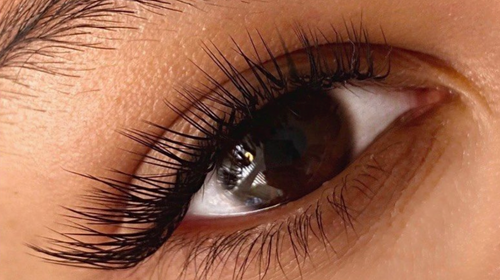
The L curl is one of those curls that doesn’t get nearly as much attention as it deserves.