Beyond the Copy-Paste Set: Why Mixed-Curl Lashing is Your Next Competitive Advantage
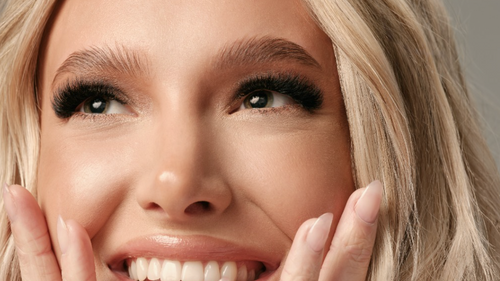
Your bag

Every lash artist knows how to follow basic mapping. But if you want to stand out in today’s highly saturated industry, copying and pasting the same uniform sets on every client won’t cut it. In our most recent Sugarlash Pro webinar, Educator Carina broke down one of the best ways to elevate your craft, attract high-value clients, and build a signature style: 3d dimensional lashing.
Dimensional lashing isn't just about applying extensions; it’s the art and science of creating depth, texture, and visual movement. By strategically combining different lash curls, directions, and natural lash layers, you move away from flat, standard results and toward bespoke, eye-enhancing art.
Uniform curl sets rely on a single curl type across the entire eye or across all layers. While clean and classic, uniform sets can sometimes look flat, overly symmetrical, or heavy depending on the client’s eye shape and natural brow bone structure.
Through intentional placement and curl mixing, you create contrast. The result? A multi-dimensional set with realistic movement, enhanced depth, and a tailormade finish that can really make your client’s eyes pop.
To build depth, texture, and balance, you need the right tools in your palette. Angles and lift profiles play a major role in how light hits the lashes. Two secret weapons for creating high-impact contrast are L Curl and M Curl. Carina specifically focuses on how these 2 curls can be used with dimensional lashing.
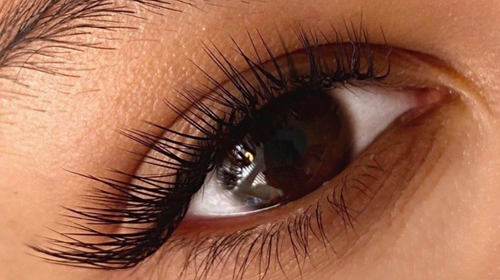
L curl extensions feature a flat, straight base that transitions sharply into a dramatic upward lift. This curl is perfect when extreme, visible lift is required. L Curl excels in layered work; for example, using a softer, classic curl on the bottom layer to fill the lash line, and applying L Curl to the upper layer to pull the set upward and create sharp vertical contrast.
M curl extensions feature a steep lift similar to an L Curl, but with a smoother, slightly softer transition angle rather than a harsh bend. It delivers a striking lifted effect while maintaining a slightly softer, more natural silhouette. It’s ideal for opening up hooded eyes or smoothing out deep-set eyes without looking overly severe.
Carina took curl mixing a step further by demonstrating a micro-level customization technique known as lash capping. This is a technique of applying a lightweight base extension to a natural lash, and then "capping" it with another lightweight extension or individual fiber placed directly above or stacked on it.
It builds a richer, darker lash line without adding dangerous weight to the natural lash (when proper light diameters like 0.03 or 0.05 are used). By applying one curl to the base (e.g., a softer C curl) and "capping" it with a different curl (e.g., an upward-reaching M or L curl), you manipulate direction and lift right at the root of a single natural lash.
If you’ve been scrolling social media lately, you’ve likely seen the stunning Arabian Lash sets taking over. This look relies heavily on multi-curl capping and length variation on single natural lashes. We will likely start seeing a lot more of this in the industry!
Creating a seamless multi-curl set starts with your setup. Organization is key when you're managing multiple lengths, diameters, and curls simultaneously. In her webinar, Carina shares her must-have tools and pro-hacks, including her favourite tweezers and how she sets up her palette. She suggests grouping extension curls systematically. An example would be your softest curl at the top, with stronger curls below. You also want to clearly label your lengths. Segmenting your tile by both curl and layer intent prevents mid-service confusion and keeps your lashing rhythm smooth.
If dimensional lashing looks so impactful, why hasn't everyone adopted it? Simply put: it requires more thought, more time, and greater technical effort. As Carina pointed out, it demands a deep understanding of lash layering and how different profiles interact in 3D space. However, that extra effort is precisely what makes it worth it. Customization becomes your personal niche; a premium service that clients can’t get anywhere else.
Now, the thought of using multiple curls within a set can feel overwhelming, especially for beginner lash artists. But you don't have to overhaul your technique overnight. Start small! Try mixing just two curls across the main map while ignoring layers. Once you build confidence with curl mixing, begin experimenting with your top, middle, and bottom layers. What once felt overly complicated will become like second nature in your artistry. By taking the time to plan texture, balance, and depth for every individual client, you elevate your brand, command higher pricing, and deliver sets that leave a lasting impression.
Want to see Carina demonstrate these techniques in real-time and learn how to map 3D dimensional sets step-by-step? Watch Carina’s free Dimensional Lashing webinar replay here.
Every lash artist knows how to follow basic mapping. But if you want to stand out in today’s highly saturated industry, copying and pasting the same uniform sets on every client won’t cut it.
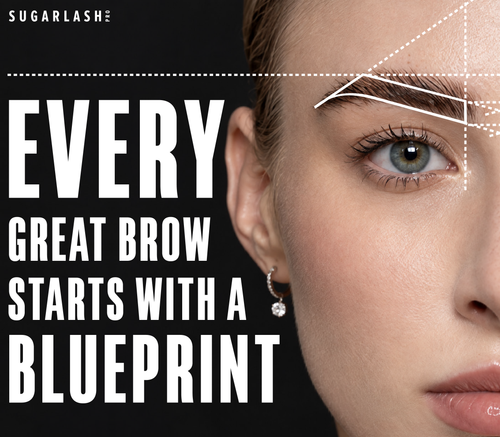
As beauty professionals, we know that sometimes the smallest details can make the biggest difference.
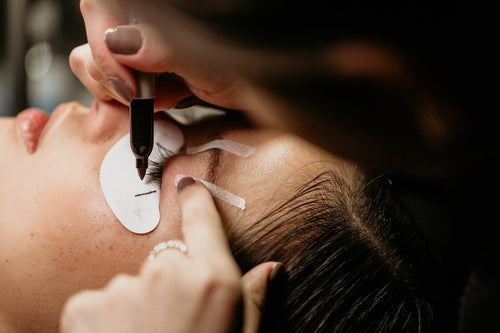
I'm sure it's happened to most of us at some point.
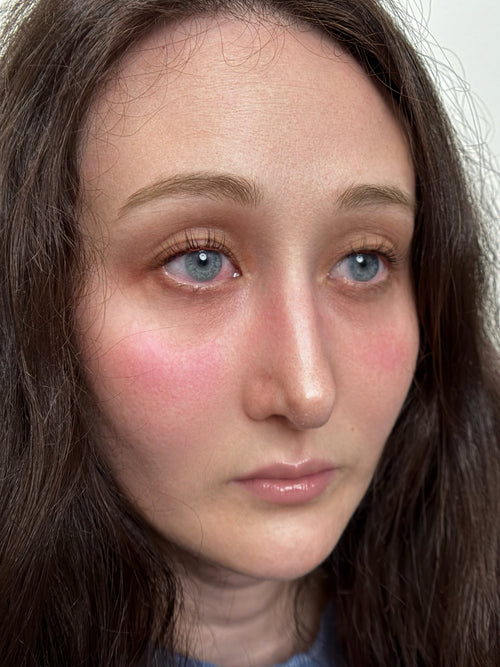
Last week, I hosted a Korean Lash Lift Masterclass where we broke down this trending technique and how to perform it using the Sugarlash PRO Lash & Brow Lift System.
The L curl is one of those curls that doesn’t get nearly as much attention as it deserves.